


Why Fully Soluble Cannabis Fertilizer Performs
6 min read
A fertilizer can carry a strong nutrient analysis on paper and still underperform in the root zone. If it leaves sediment in a stock tank, precipitates in hard water, or delivers uneven concentrations across irrigation events, the crop receives a different program than the one you intended. Fully soluble cannabis fertilizer is built to reduce that gap between the feed chart and actual nutrient delivery.
For commercial rooms, greenhouses, and serious high-frequency irrigation growers, solubility is not a convenience claim. It affects injector reliability, emitter performance, root-zone EC consistency, labor, and the plant's ability to receive a repeatable nutritional signal from vegetative growth through finish.
What Fully Soluble Cannabis Fertilizer Means
A fully soluble fertilizer is formulated to dissolve completely in water at the intended use rate, leaving the dissolved nutrient ions available for delivery through the irrigation system. That matters most in fertigation, where every irrigation event should place a predictable concentration of nitrogen, phosphorus, potassium, calcium, magnesium, sulfur, and micronutrients into the root zone.
“Fully soluble” does not mean every formula can be mixed indiscriminately with every other product in a concentrated stock solution. Calcium sources can react with phosphates or sulfates at high concentration, and hard water can change the chemistry before the feed reaches the plant. Proper solubility means the product is designed to dissolve cleanly when mixed according to its intended application and sequence.
The operational benefit is straightforward: fewer undissolved particles, less accumulation in lines and filters, and greater confidence that one zone is receiving the same nutrition as the next. That consistency is especially valuable when managing large canopy areas where small differences in irrigation uniformity can become visible differences in plant size, flower development, and harvest timing.
Why Solubility Drives Nutrient Uptake
Cannabis roots do not absorb dry fertilizer particles. They absorb nutrient ions dissolved in the soil solution or substrate water. A cleanly dissolved formula gives the irrigation system a reliable way to place those ions in the rhizosphere, where root activity, moisture content, pH, EC, and oxygen levels determine what the plant can take up.
This is why a fully soluble program should be evaluated as part of a system rather than as a bag label alone. A precise formula helps, but uptake can still be limited by cold root zones, saturated media, excessive EC, poor dryback management, unsuitable water alkalinity, or pH drift. Solubility improves nutrient delivery. It does not replace root-zone management.
The advantage becomes more pronounced in inert media such as coco coir, rockwool, and soilless substrates. These systems respond quickly to changes in irrigation water. If a feed solution varies from event to event because of incomplete mixing or settling, the root zone varies with it. A fully soluble nutrient base supports the consistent input required to steer vegetative vigor, generative development, and finishing behavior with more control.
Match the Formula to the Crop Stage
Cannabis nutritional demand changes materially between vegetative growth and flowering. Vegetative plants need a program that supports leaf area, branching, chlorophyll production, and a productive root system. Flowering plants require a different balance to support sustained flower set, biomass accumulation, resin production, and crop uniformity without carrying unnecessary nitrogen late into the cycle.
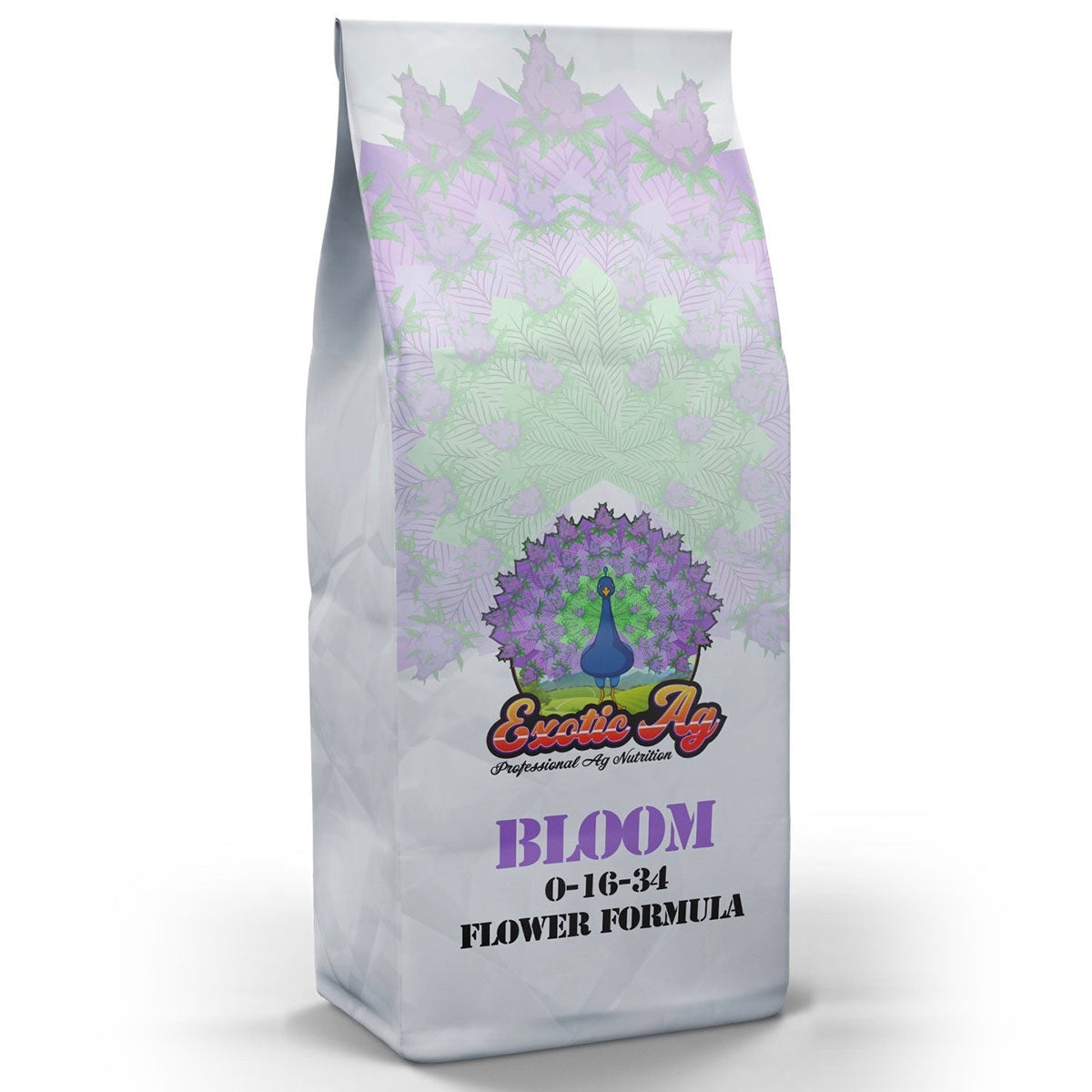
Plant Life Co offers stage-specific fully soluble macronutrient options, including Ruby Grow and Emerald Bloom, Exotic Ag Grow and Exotic Ag Bloom, Jade Grow and Pearl Bloom, plus Agate Grow designed specifically for outdoor vegetative stage cultivation. The correct selection depends on the growing system, source water, target EC, crop stage, and the rest of the supplement program.
Start with the fertilizer's N-P-K analysis, then look beyond it. Nitrogen form matters. Potassium concentration matters. Calcium and magnesium needs depend on source water and media. Micronutrient availability depends heavily on pH and chelation. A formula that works efficiently in a recirculating rockwool room may need adjustment in a drain-to-waste coco program using high-alkalinity well water.
The goal is not to chase the highest feeding strength. It is to provide a balanced, soluble nutrient profile that the crop can use consistently without driving unnecessary salt accumulation. Higher EC is not automatically higher performance. If runoff EC climbs, water content falls too far, or leaf margins begin showing stress, the issue may be concentration, irrigation frequency, or root-zone conditions rather than a missing additive.
Mixing Discipline Protects the Program
Most nutrient problems blamed on fertilizer begin at the mixing tank. Use clean water, verify water quality, and add products one at a time with adequate agitation. Never combine concentrated calcium-containing products directly with concentrated phosphate or sulfate products. Dilute each component into the reservoir before adding the next.
A dependable mixing sequence generally starts with source water, then soluble base nutrients, followed by compatible supplements and biostimulants. Calcium-magnesium products, silica, micronutrients, and finishing inputs should be used according to their product directions and compatibility requirements. Adjust pH only after the complete feed solution is mixed and the target EC has been verified.
For stock-tank operations, confirm that the injection ratio matches the formula's stock solution limits. A product may dissolve completely in a final irrigation tank yet become unstable or overly concentrated in a small stock reservoir. This distinction matters when operating Dosatron-style injectors, proportional systems, or automated fertigation equipment.
Keep records for every batch: source-water EC and alkalinity, grams or pounds added, final EC, final pH, irrigation volume, runoff percentage, and runoff readings. These numbers turn crop steering from guesswork into Agricultural Intelligence. When a response occurs, you can identify whether it followed a formula change, water change, dryback shift, or environmental event.
The Root Zone Is the Real Performance Test
A clear reservoir is useful, but it is not the final measure of a fully soluble cannabis fertilizer program. The real test is what happens after repeated irrigation events. Are plants maintaining an even color? Are growing tips active without excessive stretch? Is runoff EC stable? Are roots white, functional, and distributed through the substrate? Is crop development uniform across the room?
Regular substrate testing provides answers that leaf symptoms alone cannot. Monitor input and runoff EC and pH, then interpret those readings alongside irrigation timing, media water content, room temperature, and vapor pressure deficit. A rising runoff EC may indicate insufficient leaching, oversized drybacks, or a feed strength that exceeds plant demand. A falling runoff EC can indicate aggressive uptake, excessive runoff, or inadequate nutrient concentration.
Do not react to a single reading by making a large correction. Look for trends across zones and days. Sudden changes often come from irrigation hardware, source-water shifts, or environmental stress. Gradual changes are more likely to reflect cumulative root-zone imbalance or an evolving crop demand.
Solubility Supports a Preventative Crop Strategy
Preventative Not Curative cultivation starts before visible deficiency or emitter failure. It means using clean, compatible inputs; filtering irrigation water appropriately; checking injectors; measuring the root zone; and maintaining a crop program designed around the plant's changing demand.
A fully soluble fertilizer is one of the foundational inputs in that strategy because it supports predictable delivery. It cannot compensate for poor sanitation, weak environmental control, pest pressure, or unsuitable irrigation scheduling. But it reduces a major source of avoidable variability: inconsistent mineral nutrition.
This is also where supplements should earn their place. Calcium-magnesium inputs, silica, targeted micronutrients, rooting products, and biostimulants can be valuable when they address a defined production need. Adding every available product to the reservoir can complicate compatibility, raise EC, and make diagnosis harder. Build the base program first, then add only what the crop, water, and production objectives justify.
The best feeding program is not the most complicated one. It is the one your team can mix accurately, deliver uniformly, measure consistently, and adjust with confidence. Start with a fully soluble base matched to the crop stage, protect the root zone with disciplined irrigation, and let measured plant response determine the next move.